Families and Community Leaders Rally Behind New England Technical Academy and De La Comunidad Bilingual School Ahead of December 16 Vote
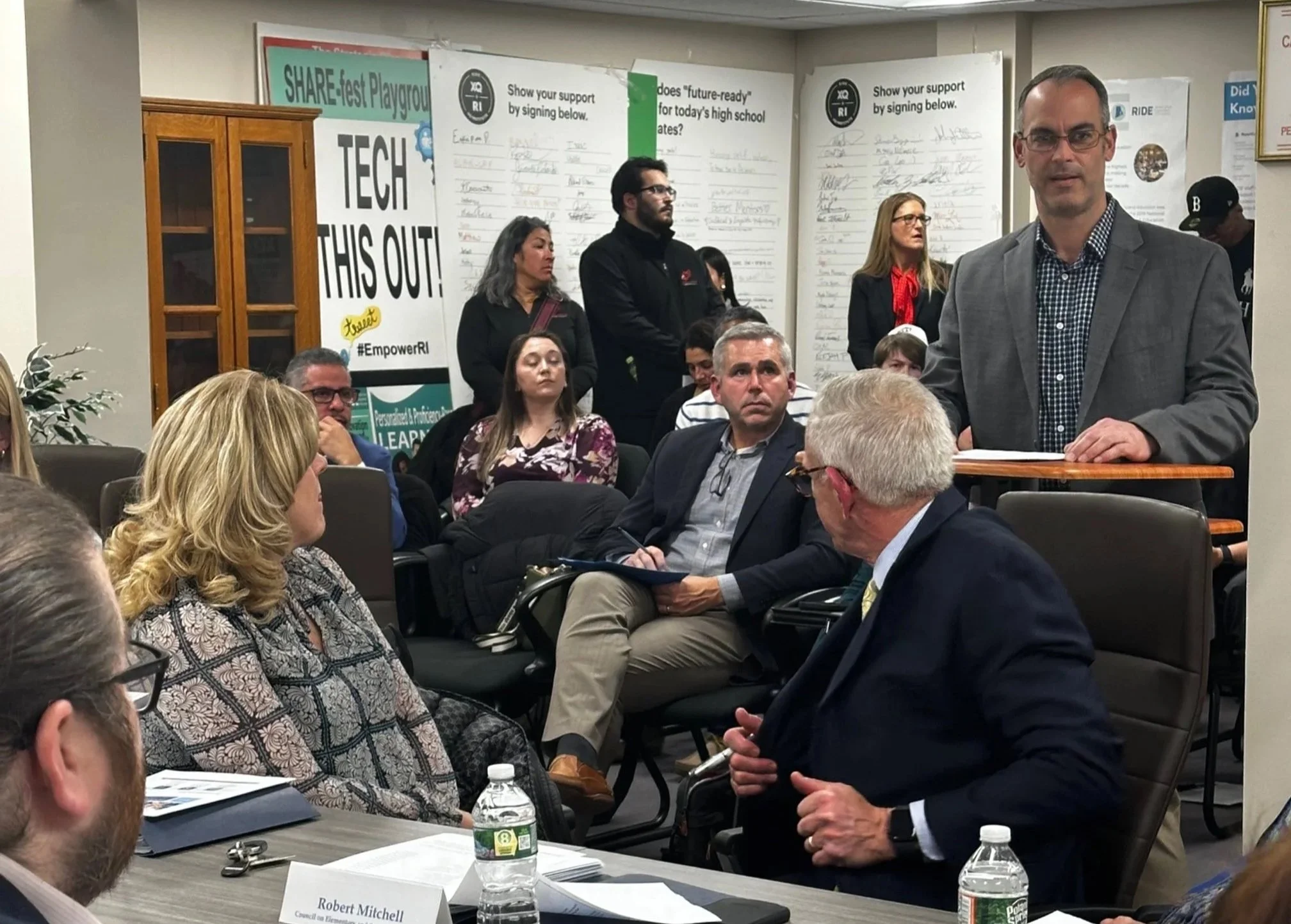
As the Council on Elementary and Secondary Education prepares to vote on December 16, families, educators, students, and community partners are showing broad support for the creation of two new charter public schools: New England Technical Academy (NETA) and De La Comunidad Bilingual School (DLC-B).
Why the Proposals Are Significant
Charter Public Schools in Rhode Island: Autonomy, Choice, and Innovation
Charters like DLC-B and NETA are proposed as independent, not-for-profit charter public schools. Under Rhode Island General Law §16-77.3-1, they are sponsored by non-profit organizations or educational institutions, operate with open enrollment, and are held to public oversight and accountability through independent boards of directors.
If approved, the new schools would add to Rhode Island’s existing portfolio of charter-public education options, helping to meet growing demand for school choice and educational models tailored to student needs.
New England Technical Academy (NETA)
NETA is designed as an early-college charter public high school that integrates rigorous academics with high-quality career and technical education (CTE). The school will offer pathways in robotics and drone technology, information technology, health sciences, and other high-demand fields, serving students statewide with a particular focus on Providence and Pawtucket. Through these programs, students will have the opportunity to earn industry-recognized credentials and college credits, positioning them for success in both postsecondary education and the workforce.
De La Comunidad Bilingual School (DLC-B)
DLC-B would operate as a K–12 dual-language, full-service community school serving students from Providence, Pawtucket, and Cranston. The school is intended to deliver rigorous academics, two-way bilingual instruction (English/Spanish), and a broad array of family and student supports with a vision of graduating students biliterate, college-ready, and community-minded.
Advocates argue that dual-language education does more than teach a second language—it offers cognitive benefits, cultural affirmation, stronger academic engagement, and preparation for a global economy.
In the context of Rhode Island’s diverse and multilingual student population, DLC-B will fill a long-standing gap by offering an inclusive, culturally responsive public option that respects students’ languages, backgrounds, and identities.
Community Support: Voices & Numbers
Proponents have shared personal stories and community-wide calls for these schools. At the November 18 meeting, dozens spoke, including parents, educators, and community leaders. The volume of support has been substantial: combined, the proposals have already generated over 3,500 letters of support and 50 endorsements from industry and community partners statewide.
Supporters emphasized how these schools could fill essential gaps — for students seeking dual-language education, and for those drawn to career-oriented pathways — and argued waiting is not an option for many families.
What Happens on December 16—and What’s at Stake
On December 16, the Council on Elementary and Secondary Education will vote on both applications. If approved:
NETA would launch in fall 2026 with the initial 9th-grade class of 144 students, expanding in the following years to serve 576 students by SY29-30.
DLC-B would open in fall 2027 as a full-service dual-language K–12 charter public school, starting with early grades (K–2) in its first year and expanding to 628 students by SY34-35.
For many families, educators, and community partners, the vote represents far more than opening new schools. It could mark a turning point: expanding educational choices in Rhode Island, offering culturally and linguistically responsive opportunities, and providing new pathways into high-demand careers.
Supporters urge the Council to vote in favor of both schools and open doors for thousands of Rhode Island students who cannot afford to wait.